
Stephen
Terry, Director


Paul's
Ministry in Corinth
Commentary
for the July 4, 2026, Sabbath School Lesson
 "One
night the Lord spoke to Paul in a vision: 'Do not be afraid; keep on speaking,
do not be silent. For I am with you, and no one is going to attack and harm
you, because I have many people in this city.' So Paul stayed in Corinth for a
year and a half, teaching them the word of God." Acts 18:9-11
"One
night the Lord spoke to Paul in a vision: 'Do not be afraid; keep on speaking,
do not be silent. For I am with you, and no one is going to attack and harm
you, because I have many people in this city.' So Paul stayed in Corinth for a
year and a half, teaching them the word of God." Acts 18:9-11
Paul was an apostle born out of
season. He was never called to be an apostle by Jesus during the three and a
half years the Messiah traveled throughout Israel and Samaria. He was not chosen
by the other apostles when they cast lots to replace Judas after his betrayal
of Jesus and subsequent ignominious death. They chose Matthias instead and believed
that God had endorsed that choice. No one would have predicted God had anything
else planned to replace the missing disciple. In their most wild imagining,
they would not have selected Paul who assented to the murder of Stephen, one of
the first seven deacons selected by the church whom the apostles laid hands on
to set them aside for special service in the early church. They would have been
hard put to have found anyone more opposed to Christianity than Paul.
Not satisfied with persecuting
the followers of Jesus in Jerusalem. Paul sought and obtained a warrant from
the high priest to persecute and arrest Christians in Damascus also. This was a
trip of seven days on foot or a couple of days less on horseback. It speaks to the
seriousness of Paul's opposition to Christianity that he would be willing to
undertake such a journey. But it is on that very journey that Paul says he was
called to become an apostle by Jesus. The claim seems dubious and strange, but
it is not impossible that God could and would create such a change in someone's
heart. Manasseh was arguably the evilest king to rule in Jerusalem. Ironically,
if God had not extended good king Hezekiah's life, Manasseh would never have
been born. In 2
Kings 21:1-17 we are told that Manasseh filled Jerusalem with blood from
one end to the other and he is credited with only evil for his entire reign. He
is also credited with the murder of the prophet Isaiah by sawing him in two as
alluded to in Hebrews
11:37. But in 2 Chronicles, we are told differently that he sought the Lord
after he was taken captive to Babylon by the Assyrians, and he was later restored
to his throne in Jerusalem. (2
Chronicles 33:1-20) If God could reach the heart of Manasseh, he could
reach Paul despite the hatred of Christians burning in his heart.
On that trip to Damascus, Paul
was blinded and confusion abounded on both sides. Paul was struggling because the
encounter challenged everything he believed to be true. The Christians of
Damascus were confused because they suspected Paul was using a ruse to draw
them out to be arrested and imprisoned. The potential for impasse was so great
that God had to call Ananias, a Damascene Christian and direct him personally to
minister to Paul to cure his blindness and instruct him in Christianity. But
Paul did not remain in Damascus. Instead, he sought the solitude of Arabia. We
are not told what he did there, but eventually he returned to Damascus and
after three years had passed, he finally went to Jerusalem to meet Peter. (Galatians
1:15-18) It is as though he purposely sought a different spiritual
experience not influenced by the other apostles.
Later, certain Jewish Christians
from Judea confronted him over the issue of circumcision since he had not been
requiring it of Gentiles who had accepted Jesus. This conflict threatened to
divide the church, so he traveled to Jerusalem to discuss the matter with the
apostles there, a meeting often referred to as the First Jerusalem Council.
Once that issue was resolved, it removed a major obstacle confronting his evangelism
among the Gentiles. Paul began evangelizing in earnest in Anatolia and crossed
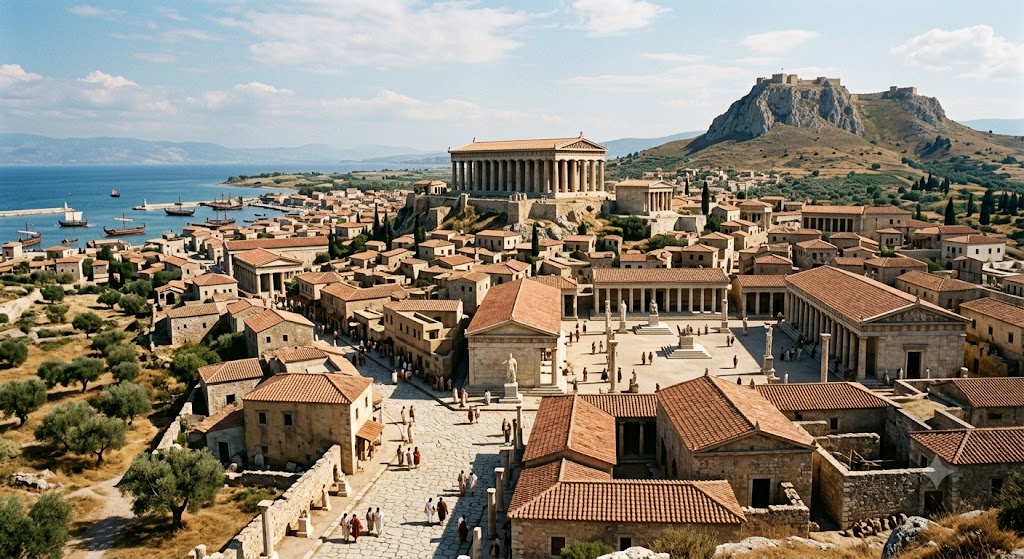
into Thrace and Greece, thus arriving eventually in Corinth. He found the
Corinthians to be open-minded people, seeking to understand new ideas and
customs. Paul was a tentmaker, perhaps a skill he learned in nomadic Arabia. He
became friends with Aquila and Priscilla, fellow tentmakers and supported
himself, his fellow travelers, and his ministry by working at this trade. Strangely,
for all those who today see Paul as vital to the growth of the early church,
they overlook the fact that his ministry was built on a self-supporting model.
Today's preachers and
evangelists, for the most part, have abandoned Paul's model and instead are
constantly demanding their followers pay them tithe and offerings to "support
the work" so Jesus will return. At Still Waters
Ministry, we have made every effort to follow Paul's leading in this area. Since
our founding in 1997, we have never asked for money and when it has been sent
to us, we return it to those who have sent it with an explanation that God is
well able to provide for his work. We did not begin Still Waters Ministry as a money
raising venture, nor do we ever intend to do so. Nonetheless, God has blessed
us with adequate self-support to have a global digital presence in over 150
countries and over a hundred thousand visitors to our online ministry each
year. When people ask me how to begin a similar ministry, I tell them to learn
a trade as Paul did. Even Jesus learned carpentry.
God did not create humanity to sit
around in the Garden of Eden waiting for fruit to drop into their mouths. Mankind
was put to work tending the garden. I don't think he intended his ministers today
to live on streams of gold coerced or beguiled from their followers. A minister
who relies on pay from a religious institution must serve that institution,
even if he or she disagrees with what they are promoting to feed and clothe
themselves and their families. It is a difficult position to be in, especially
as one grows in the Spirit and discovers older teachings to be problematic. The
minister who is self-supporting owes no such allegiance to an institution but
is free to follow wherever God leads. Truth is more likely to be spoken freely
in that situation rather than when an organization seeks to punish dissent over
theological differences.
Paul was very free. Sometimes
that got him into trouble as when he went up to Jerusalem despite the Spirit through
the prophet Agabus warning him not to. (Acts
21:10-13) As a result, he lost much of his freedom and spent far too much
time in prison that could have been better spent evangelizing. However, even
then, like Martin Luther King, Jr. and his "Letter from Birmingham Jail," Paul
seized the opportunity his imprisonment provided to write letters to the various
churches he had founded, encouraging them and providing them with guidance. Indirectly,
his imprisonment may have been a major reason why so much of the New Testament
consists of his epistles. As a result, Pauline theology and misinterpretations
of that theology permeate the modern Christian church almost completely
displacing competing perspectives.
We often forget the other
theologies that are less represented in the biblical canon, but they exist. We
have Petrine, Jacobine, and Johannine epistles as well as the synoptic gospels
that along with the Gospel of John, and Revelation offer alternative perspectives
on God's character, the church, and the Parousia. One very telling difference
is between the grace of God Paul presents in his epistles to the churches in Galatia,
Ephesus, and Rome in contrast to the emphasis on our works as presented in
James' epistle. That contrast was so great in Martin Luther's eyes that he
referred to James' letter as "that straw epistle" and questioned whether it
should be included in his German translation of the Bible. He also questioned
whether Revelation should be in the canon since the wrathful vengeful God it portrays
is so completely different than the God who is love portrayed by the one
claimed to be Revelation's author, John, in his epistles and his gospel.
As we study Corinthians I and II
this quarter, we should bear in mind that God may be less troubled by these
different perspectives than we are. Rather than trust in God, we tend to create
institutions that last for millennia and expect them to provide sanitized
understandings of all of scripture that all might be compelled to accept only
one version as the officially recognized explanation of the Bible for understanding
and praxis under penalty of shunning or disfellowshipping. The modern church
operates under the assumption that heretics abound and only the properly
recognized magisterium can parse what is and is not orthodoxy. The Magisterium
is an official voice of the Catholic Church which has lost much of its
authority to control faith as it once did during the Crusades and Inquisitions
of the past. However, that authority is eagerly being pursued by Protestant
Evangelical denominations as they recreate the image of the Magisterium that earlier
was the sole purview of Catholicism.
It was institutional and
political control of religion that rejected Jesus during his incarnation. It
was institutional and political control of religion that rejected the prophets
and destined the nations of Israel and Judah for captivity in Assyria and Babylon.
It was institutional and political control of religion that enslaved an entire
race in the United States claiming it was justified biblically and led to the
death of hundreds of thousands in a bloody civil war. When will we learn to
seek freedom instead of subjecting ourselves to such control in matters of
faith and truth? Jesus said, "if the Son sets you free, you will be free
indeed." (John 8:36) Paul experienced this kind of freedom. As we read in the
Corinthian epistles this quarter, let us seek the freedom Paul enjoyed.