
Stephen
Terry, Director


The
Creator Speaks
Commentary
for the October 3, 2026, Sabbath School Lesson
 "Surely the Sovereign Lord does nothing without
revealing his plan to his servants the prophets." Amos 3:7
"Surely the Sovereign Lord does nothing without
revealing his plan to his servants the prophets." Amos 3:7
In
the Bible, depending upon the translation for the exact count, the word prophet
is found over 430 times. Many of those times are plural such as when referring to
the schools of the prophets, implying that even 430 may be far less than an
attempt at a total count. The title carries with it an aura of mysticism founded
in prehistory. Without any direct account of the creation of the office of prophet,
the Bible does provide allusions as to why the position became necessary.
In the
beginning humanity walked and talked with God face to face in the Garden of
Eden. We bore the image of God in our hearts, minds, and bodies through God's
artistic and creative act. Anyone who knew God and ran into us in the Garden
would immediately see the family resemblance. Even today that experience is not
entirely gone. Have you ever met someone and from the very first you could tell
that they have walked with God from the special glow emanating from their eyes?
Making eye contact, one can feel the peace in their hearts
effortlessly flowing into one's own. I am not talking about the arrogant
charisma some religious celebrities affect. No, I am referring to the love that
one can tell originates from somewhere beyond any human heart.
That
was the love that Adam and Eve felt walking with God in Eden. But human beings
are a fickle lot, constantly looking for greener grass elsewhere, and we always
seem to be stumbling from one disaster to another and never truly happy where
we are or even where we end up should we find a small patch of slightly more
verdant grass. Instead of bringing rest from our striving for more, it leads us
to wonder if there is not yet another place even greener still. We have trouble
realizing that what made the Garden of Eden so special was not the flora or
fauna there but the presence of God who brought with him love, compassion, and
mercy. Without his presence, Eden was like pie without the ice cream, nice but
incomplete. Nonetheless, despite all of that, first Eve, then Adam, chose to
walk away from it all. Their story is the original fear of missing out (FOMO) as
they chose to go over the metaphorical fence around the Tree of the Knowledge
of Good and Evil and pick and eat the fruit from that singular orchard.
While
they had no fast-food restaurants, they were not starving, for God had created
plenty for them to eat. Besides, having never eaten the fruit of that tree
before, they had no idea what it would taste like. While we can see the error
in their thinking that sent them down a troubled path, who of us has not done
the same because we were afraid of missing out on a new experience: fear of missing
out on the new gadgets and styling of a new automobile, or fear of missing out
on being part of the in crowd with a new outfit or handbag. When we see advertising
on social media or television much of it is based on appealing to that fear of missing out on something, and the people in the ads look so
happy and joyful as they are using whatever item is being promoted. Our FOMO is
so powerful that we are even drawn into all the dancing and smiling in ads
promoting medicines and cures with side effects that would scare the devil
himself, and we dance right along with the actors into the doctor's office
asking why we cannot have the happiness they have. If we are successful in our
quest, we will walk out of the clinic with a new prescription for joy that will
hopefully last until the next commercial break.
Sadly,
while we had that happiness once, we failed to see it for what it was. And ever
since that first sales agent approached us to sell us on the idea of the fruit
from one unique tree being the panacea for all the restless FOMO unsettling our
hearts, we have been continuously inundated with appeals to try everything else
we have so far missed out on. We are so overwhelmed with endless marketing that
we fail to see how much God has missed our companionship. We are totally caught
up with the next important thing, and with the help of so many sales agents, we
have convinced ourselves that things produce happiness. But there will always
be people in new advertisements, even after we get what we want, who will tell
us all is well and good with what new things we have now, but the journey isn't
over yet, there are still many things we have not tried. Eventually, when we
are old and broken and no longer able to dance along with that siren's call, we
will realize that it was all an illusion.
We may wonder upon waking from
that fever dream if happiness is possible or if Shakespeare was correct. "All
the world's a stage, and all the men and women merely players; They have their
exits and their entrances, and one man in his time plays many parts..." ("As You
Like It," Act II, Scene VII) Poets may arguably have even more insight. Oscar
Wilde, commenting on Shakespeare's assertion stated, "The world is a stage, but
the play is badly cast." This can be seen when the cast is made up entirely of those
who fear they are all missing out and compete with one another mercilessly to
obtain that illusory happiness with the result that all are miserable and continue
to stoke that misery in one another.
God knows what will make us happy,
but when we refuse to walk and talk with him, when we are like little children
sticking our fingers in our ears, we can hear nothing but are mesmerized by the
images flashing before our eyes and their continual calls for us to find happiness
in things instead of relationships. We need to find our way back to that Edenic
relationship forsaken so long ago. It is not as hard as we might think. While
we have ignored and turned away from God, he has never stopped loving us. While
we have not sought him or even cared that God existed, he has continually sent
his own representatives after us. They only became necessary because we have a
hard time trusting God after so much disillusionment over our search for happiness,
so he did two things, he incarnated as Jesus that humanity might get as close
as possible to walking again with God to see what it was like and the true nature
of God's character. He also sent his prophets, other human beings capable of relating
to humanity on a more equal level because they lived and strove for happiness
in the same environment as the rest of us.
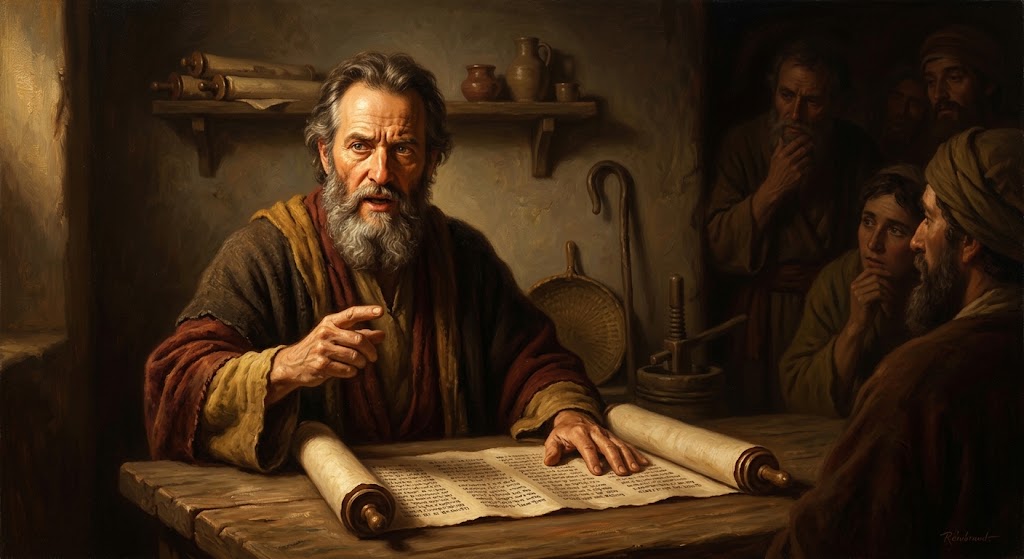
Most of us, if we have any
picture at all, picture a prophet as an older man in robes who goes around shouting
at people. However, God does not go around shouting at people, and those who
walk with him for any length of time learn that as well. God's voice is a
gentle whisper. (1
Kings 19:12) There is no place for fear in walking with God. Fear is what
messed us up in Eden when we feared we were missing out. Apostle John, commonly
known in his gospel as the disciple that Jesus loved. Told us that "God is
love." (1
John 4:8) Much of humanity was given over to fear for an exceptionally long
time. That is why there is so much about being afraid of God in the Bible.
People lost sight of his character, and since people had been taught to fear
and learned to willingly submit to manipulation through fear, it became almost natural
for the church to default to the same position, manipulating people through
fear.
It is possible to increase
membership in churches that way, but one does not end up with a church of
people in a loving relationship with God and one another. Love and fear cannot
coexist. John explained that. "There is no fear in love. But perfect love
drives out fear because fear has to do with punishment. The one who fears is
not made perfect in love." (1 John 4:18) "Everyone who loves has been born of
God and knows God. God is love. Whoever lives in love lives in God, and God in
them. We love because he first loved us." (vs 7, 16 & 19)
It is God's purpose to restore
his image in us as we were created in the beginning. He understands us better
than we understand ourselves. He knows that fear drives a wedge into relationships
and where fear is, true equality can never exist. Fear does not allow for
compassion, mercy, and grace. That is why it is not wrath but kindness that
draws humanity to God. (Romans
2:4) And when we come, he will lovingly restore in us hearts capable of
loving again. He will turn them from stone to flesh. (Ezekiel
36:26) As we change, we will once again hear God's gentle whisper lovingly guiding
us. "Whether you turn to the right or to the left, your ears will hear a voice
behind you, saying, 'This is the way; walk in it.'" (Isaiah 30:21)